
We tested AI-generated content at scale and the results were worse than zero. Here is what actually works when combining AI with SEO.
The Worst Way to Build (or Redesign) Your Website
The main character of this article is a business owner or a marketing manager who has decided to do the right thing in the wrong way. We have seen this film many times: they have decided to redesign their company website, perhaps because it looks dated and they want to bring it up to speed. The premise is excellent and perfectly sensible. The mistake is in the execution, because our hero focuses entirely on the design.
They browse the web and find a template they like, or they go straight to a graphic designer and commission a beautiful design. They invest a reasonable amount of money and a colossal amount of time in the operation, but after launch comes the cold shower: all that work has zero significant impact on the business. No increase in visitors, sales or conversions. The ROI of this redesign is exactly zero.
The problem is not the project itself. Redesigning a website can be an excellent idea, especially if you are planning to integrate new features or new content rather than just refreshing the look. To use a fairly common metaphor, your company website should be thought of as an employee — a salesperson or a public relations officer — and nobody hires a candidate based solely on the clothes they wear.
The approach used by the hero of our film is understandable but completely wrong. The mistake is that the project put design first, when it should actually be the second item on a list of three:
- Planning
- Design
- Development
Let us go through each phase, starting obviously from the one that is most often skipped.
Planning a website
It may sound obvious, but at the heart of good planning lies the answer to one simple question: what is the purpose of the website? An e-commerce site needs to sell. An informational site needs to capture a visitor’s attention for as long as possible. A blogger will want to grow their newsletter subscribers. And so on.
In every successful project, the first step is to identify the site’s purpose. This purpose must be measurable, and the entire project team — from designers to developers — must have a crystal-clear understanding of the primary objective.
We have been building websites for more than ten years, and we can tell you from experience that projects which skip this step almost invariably produce disappointing results. A pretty website with no clear purpose is like a beautifully furnished shop in the middle of nowhere: lovely to look at, but nobody walks in.
Site structure
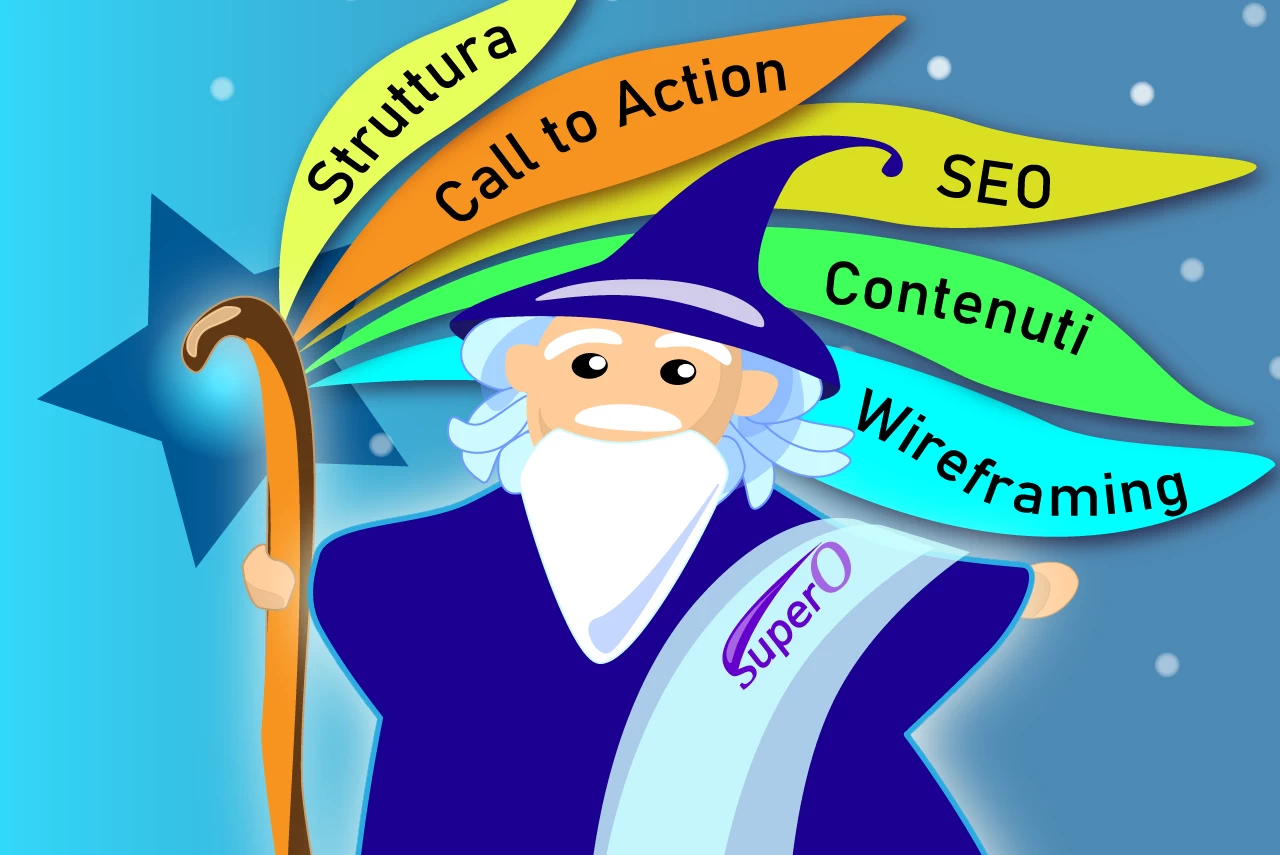
In this phase you plan the pages of the site, their order and their hierarchy. Visitors need to find the information they are looking for with ease, and so do search engine crawlers. This is when you identify the most important pages — the ones that will need to generate conversions.
When the structure is well designed, both human visitors and search engines benefit. A well-balanced structure is not only a sign of a well-planned site, but it is also much easier to maintain when you later decide to add new content.
For example, the structure of a simple website might look like this:
- Home page (obviously)
- Services
- Web Design
- Hosting
- SEO
- Blog
- Industry news
- Tips and resources
- Contact
- Privacy Policy
- …
A simple bullet-point list is an effective way to describe a site’s structure. It allows you to see the entire tree at a glance and to spot any obvious imbalances. For sites with a relatively small number of pages this phase can be quick and straightforward, but it should never be skipped.
An important point: the purpose of the structure planning phase is not to produce an immutable map of the entire website, but rather a starting point. It is perfectly normal — and even expected — to go back and revise the map several times as the project progresses through the other phases.
Conversions and metrics
This is where you design the methods for guiding visitors towards the actions that matter to you. We are talking about Calls to Action: the paths that lead to achieving the website’s primary objective.
For an e-commerce site, identifying conversions is straightforward: every sale is a conversion. It gets slightly more complicated for service-based websites, where you need to decide what type of Call to Action to use and where to place them. Should they live on dedicated pages or be integrated into service pages?
A Call to Action typically involves clicking a button or filling in a form: “request a free quote”, “subscribe to our newsletter”, “book a consultation”. For forms, there is a golden rule of the internet: you can ask your visitors for a lot of information, but only if you have already earned their trust.
Once you have identified your Calls to Action, you configure your analytics software to track them properly. This is the metric that will measure the success of the project. We use and recommend Matomo, an excellent open-source analytics platform that also happens to be fully GDPR-compliant — which is not exactly a minor detail if you operate in Europe.
After identifying the Calls to Action and deciding where to place them, you update the site map to highlight these crucial pages.
SEO
Taking search engine optimisation into account from the very earliest stages of creating or restructuring a website saves an enormous amount of time. You can begin thinking about keywords from the very first phases of the project, which allows you to plan the necessary pages before you even start working on the content.
During keyword analysis, you might discover a keyword that deserves a dedicated piece of content. Once again, you go back to the site map and adjust it to accommodate this opportunity.
You can also make quantitative assessments about the content. For example, we know that ranking for certain keywords requires more than a single page. Knowing this from the outset allows you to plan an adequate structure and to properly schedule the content that needs to be developed.
If you are thinking that SEO is something you can bolt on after the site is finished, we would respectfully suggest reconsidering. Retrofitting SEO onto an existing site is possible, but it is considerably more expensive and less effective than building it into the foundation from the start. It is a bit like adding a lift to a building that was designed without one: it can be done, but you really wish someone had thought of it earlier.
Content planning
Content is an essential component of building a website. Unfortunately, it is also the most laborious (and tedious) part, and we have seen many projects get bogged down at exactly this point.
When we build a website for a client, we need collaboration on content creation. We are not the ones who know the business, the services, the products — we need material to work with. In most cases, the company already has all the content it needs: catalogues, brochures, flyers, presentations, proposals… It is a matter of organising and rationalising all these sources to produce the texts and images required.
When we are not directly responsible for all page content, we always recommend using our own template that we can share during the project. This template contains the skeleton of each page — headings, subheadings, content blocks — a ready-made structure waiting to be filled in. This approach drastically reduces the back-and-forth and keeps the project moving.
For informational websites, content planning precedes the preparation of the editorial calendar. The editorial calendar is what keeps the site alive after launch. It should also be taken into account during the structure planning and wireframing phases, because you need to know where new content will live before you finalise the architecture.
A word of warning based on hard-won experience: never underestimate the time required for content creation. It is almost always the phase that takes longer than expected. If you are planning a website redesign, start gathering and organising your content well before anything else. Your future self will thank you.
Wireframing
This is where we finally begin to talk about the design of the site, but still not the visual design. Wireframing imagines the behaviour of a visitor on the site: how will they navigate? How will they find the information they are looking for? How will the menus and sidebars be arranged? Where will the search box be placed? Which information needs to appear on every page, and therefore how should the footer be structured?
All of these are decisions made during wireframing.
It is crucial not to postpone wireframing to the design phase. The risk is that you end up adapting the content and structure to a design you happen to like, when it should be exactly the other way around. The design should serve the content and structure, not dictate them.
A wireframe does not need to be pretty. Rough sketches on paper, basic greyscale mockups, even annotated bullet-point lists can work perfectly well. What matters is that you have thought through the user experience before anyone opens Figma or Photoshop.
So, when does design come in?
Only now. Only after you have defined the purpose of the site, planned its structure, identified the conversions, considered SEO, planned the content and sketched the wireframes.
At this point, the designer has something truly valuable to work with: a clear brief. They know which pages exist, what each page needs to accomplish, where the Calls to Action sit, what content will be displayed and how users are expected to navigate through the site. The result is a design that is not just beautiful, but also functional, purposeful and effective.
Compare this with the approach of our hero at the beginning of the article: a designer working without a brief, producing something that looks great in a portfolio but has no connection to business objectives. The difference is enormous, and it shows in the results.
Development: the last mile
The third and final phase is the actual development of the website. With solid planning and purposeful design in hand, development becomes a matter of execution rather than improvisation.
This is also the phase where technical choices come into play: which CMS to use (we work primarily with WordPress), which hosting environment, which security measures, performance optimisation, mobile responsiveness, accessibility compliance. These are important decisions, but they are much easier to make when you know exactly what the website needs to do and how it needs to look.
A common mistake at this stage is cutting corners on testing. We always recommend thorough testing across devices and browsers before launch, including testing all Calls to Action, forms and analytics tracking. There is nothing quite as frustrating as launching a beautifully planned and designed website only to discover that the contact form does not work on Safari.
What we have learned
After more than a decade of building and redesigning websites, we can say with confidence that the single most common mistake is starting from the design. It is an understandable mistake — design is the most visible and exciting part of a web project — but it is also the most expensive one, because it often leads to rework, missed objectives and disappointing results.
The correct order is always: planning first, design second, development third. This approach takes slightly longer at the start but saves an enormous amount of time, money and frustration in the long run.
If you are considering building a new website or redesigning an existing one, we would be happy to discuss your project. We will almost certainly start by asking you about your business objectives rather than your colour preferences. That is a good sign.

Related Posts

This Post Has 0 Comments